
Argentina
5 reasons to visit the Zanjón de Granados in Buenos Aires

Share whith yours friends:


Tags:
If you are looking for little known activities in Buenos Aires, the Zanjón de Granados is, without a doubt, one of the most fascinating places to visit in the city of fury, one of those places that surprise with an unparalleled experience. Walking through the neighborhood of San Telmo we find a museum at 755 Defensa Street, which seems small but extends for almost half a block, and the most interesting thing ... this half block is made underground, through tunnels of the XIX century. Surprising, isn't it? enjoy this article that will take you, together with Daytours4u, to travel through time and the history of our beloved Buenos Aires. Stay with us to know the 5 reasons to visit the Zanjón de Granados in Buenos Aires. ![]()
![]()
![]()
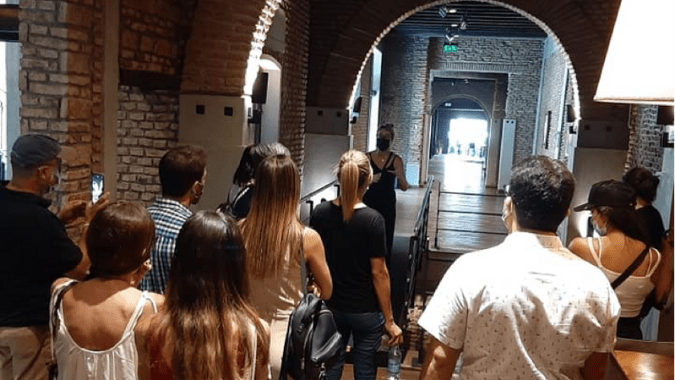
The history of Zanjón de Granados will surprise you / Photo: Solange Maria de Souza
1- Its tunnels
In 1985, the chemical engineer Jorge Eckstein bought this Italian style house dating from 1830 for the price of 2 popular cars. His idea was to turn the house into a gastronomic enterprise. The house was in such bad shape that Don Jorge, as he is affectionately called, had to enter from the second floor, up a flight of stairs. The amount of garbage, rats, debris and ruins he encountered did not discourage this visionary, who saw beyond, saw in a way that to many seemed utopian, the potential of the great house. Only something unexpected and fascinating happened: the architect who was renovating the house called Don Jorge with some rather curious news: "Don Jorge, we have a problem... we have found a tunnel". For a soul as versatile as his, this was not considered a problem, but something wonderful. So he hired a team of archeologists from the renowned University of Buenos Aires (UBA), led by the famous Daniel Schavelzon, excavated the site and discovered the past of these fascinating tunnels. The tunnels were in fact part of the piping of a stream called "Zanjón de Granados", made in the 19th century. To understand the trajectory of this stream we have to rewind history to more than 500 years ago.2- More than 500 years of history
When the first Spanish conquistadors arrived in 1536, Buenos Aires was a swamp. It had some streams that were formed with rainwater and flowed from the highest parts of the city to the Río de la Plata, which at that time reached the height of Paseo Colón Avenue. The stream that was formed to the south of the city, down from what is now the Constitución Train Station, was called Zanjón de Granados. It is said that its name is due to the fact that the Granados family lived on its banks and their daughters sold a wonderful quince jam, so delicious that they gave the creek its name. As time went by, the villagers, unaware of basic hygienic factors, used the creek as an open-air dump. Even dead animals were even dumped there, hoping that the rainwater would carry their remains to the river, but it often took a long time for it to rain and the strong smell and soil contamination were inevitable. For this reason, in the 19th century, the streams began to be channeled.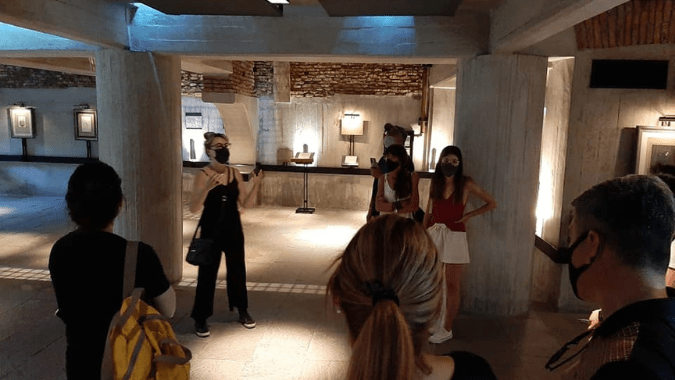
Walk through the hidden tunnels under the city of Buenos Aires / Photo: Solange Maria de Souza
3- The Afro-descendant past of Buenos Aires
The Miguens family was the one who ordered the construction of the house in 1830. The house has the famous Pompeian style, a style that aristocratic families wanted to imitate after the discovery, in the 18th century, of the ruins of the Roman cities of Pompeii and Herculaneum. Pompeian houses are characterized by 3 courtyards, one with a public place to receive visitors, a second used only by the family and a third where the orchard was, where the horses slept and where the staff working in the house could have some peace and quiet. It was discovered through documents that the Miguens family "owned" 6 enslaved people of African origin. Even pipes of African origin were found. A curiosity is that although today it is difficult to find an Argentinean of African descent (I say apparently), the words "tango" and "milonga" are of African origin. During the visit, several curiosities are told about slavery in the Rio de la Plata.4- The history of The Tenement
In 1871, the city of Buenos Aires suffered one of the most horrible moments in its history. A third of its population died because of the yellow fever epidemic, which caused the rich families living in the south of the city to move immediately to the north, what today are the neighborhoods of Recoleta and Retiro, where they built their French palaces. At that time Argentina was one of the richest countries on the planet, called "the farm of the world", and this was noticeable in its architecture, a wealth that the country still possesses today and leaves its visitors impressed. The house remained abandoned for some years until it became a tenement to receive some of the thousands of immigrants from different countries of the world that arrived to the Port of Buenos Aires, in search of better living conditions. In this house where about 15 people lived at the time of the Miguens, it ended up being home to 100 immigrants from different parts of the world, who shared two bathrooms and a kitchen.... Can you imagine? The place functioned as a home until the 1970s, when it was closed due to danger of collapse.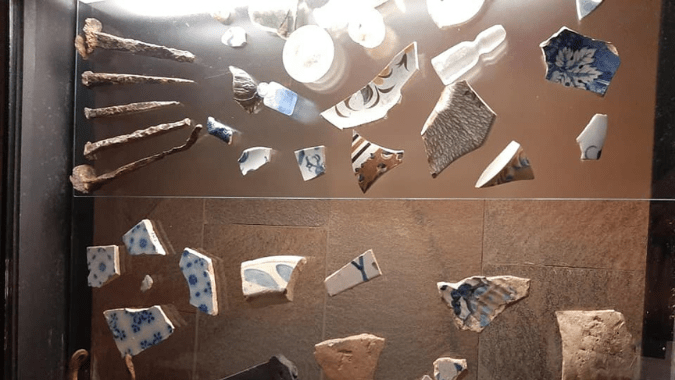
Admire a part of Buenos Aires with history told in a different way / Photo: Solange Maria de Souza
5- The passion of Don Jorge
It's a lot of history, isn't it? But in a one-hour visit you learn even more and in the best possible way, through experience. That is why it is a friendly visit for all ages, children follow the story with bright eyes and for the elderly and people with reduced mobility, the space offers elevators. Come to Buenos Aires with Daytours4u and enjoy a different program that will enrich your spirit and intellect. Walking through the tunnels like in the movies, learning more about urban archeology, that discipline still little explored, know Buenos Aires from the inside is one of those experiences that remain engraved in the soul. Another good thing is that this private museum, recognized by Unesco, offers fair prices, depending on the country the visitor comes from. To maintain this space full of memory is not easy, but it receives the dedication and tireless effort of Don Jorge, who at the height of his 80 years still receives some visits and conducts guided tours that overflow passion, enthusiasm and love for each of these bricks that he rescued with the soul of an artist. Thanks so much, Don Jorge! Travel tip: Another emblematic place in Buenos Aires that belongs to the museum is the Casa Mínima, the narrowest house in Buenos Aires. Also known as "The house of the freed slave", it is a place full of legends that can also be toured with a guided tour. If you purchase both tours, you will get a special discount. Come and meet them in person!By: Marina Bohn, guide for Daytours4u and Zanjón de Granados. Already guided the Casa Rosada and the Barolo Palace. Brazilian who suffers an acute infatuation for Buenos Aires.
Share whith yours friends:
Tags:
Search

Popular Tags
-
Iguazu Falls Brazilian Side TourfromUS$46
-
Exciting 4x4 route: São Luís and FortalezafromUS$2,250
-
-
Full Day Cafayate Tour from SaltafromUS$39
-
-
Transfer Ezeiza - AeroparquefromUS$107
-
-
-
-
-
-
-
-
Tierra del Fuego National Park Tour with Optional End of the World Train in UshuaiaRating:100% of 100fromUS$69
-
-
-
-
-
-
-
-
Daytours4u © 2012-2019. Use of this website constitutes acceptance of the Terms & Conditions.
Open Chat
Hello, How May I Help You?