
Bolivia
5 Tips to take the Best Photos at Salar de Uyuni

Share whith yours friends:


Tags:
White, bright, arid... Did you know? South America has two of the largest salt flats in the world, one of them is the Salar of Uyuni. In fact, between Argentina, Bolivia and Chile, more than 80% of the planet's lithium is accumulated.
The salt flats give us the strange sensation of walking on a cloud. And according to the weather, it is almost impossible to distinguish the limit between the earth and the sky.
It's really crazy to stand in the middle of the Uyuni salt flat. Its 12 thousand square kilometers generate an incredible magic, which makes us get lost between the sky and the ground. And it's there, in the middle of that salt desert, that we come up with the most creative photos that our social networks will see. So if you plan to take a tour around the Salar de Uyuni or visit the Salinas Grandes in Argentina, I assure you that you will take many pictures, whether you plan it or not, it will be inevitable. But, a few tips and tricks to get pictures that look like film wouldn't hurt, right? So today we want to share with you our 5 tips to take the best photos at Salar de Uyuni.
As you can see, the setting is unsurpassed: a white salt plain, usually covered by a layer of shallow water that has become a giant mirror. The Salar de Uyuni is a natural icon of Bolivia, and one of the most sought-after destinations in the country, and one that you definitely cannot miss. Your trip to the Salar de Uyuni is not complete without taking some of these pictures as a souvenir and... Don't forget to bring extra batteries for your camera! Travel Tip: Check out all the tours and activities in Bolivia that Daytours4u has for you, from interacting with local communities to the best authentic experiences.
![Salar de Uyuni]() The Salt Flats are immense surfaces rich in minerals and animal life / Photo: Canva Pro
The Salt Flats are immense surfaces rich in minerals and animal life / Photo: Canva Pro
The salt flats give us the strange sensation of walking on a cloud. And according to the weather, it is almost impossible to distinguish the limit between the earth and the sky. 
The Salar de Uyuni
The world's largest salt flat covers an area of more than 12,000 square kilometres and can be seen from space. It is located in southwest Bolivia, in the department of Potosi. Uyuni, also called Salar de Tunupa, literally touches the sky. It is about 3600 meters above sea level and produces more than 10 billion tons of salt annually, although it is also an important reserve of other mineral salts such as lithium and sodium. Unlike other salt flats, such as the Salar de Atacama in Chile, it currently contains more than 10 billion tons of salt in several layers. This is why cars can cross it without any problem and we can walk on it without restrictions. Travel Tips: sunscreen and sunglasses, hat, water, comfortable clothes, coat, comfortable shoes and cash (to access the bathroom on the way, to take a shower and to pay for some tickets that run outside the excursions) are essential.![Salar de Uyuni]() Several salt hotels have been built on the shores of the salt flats, and in the centre of them emerges the Fish Island with cactus up to ten metres high / Photo: Canva Pro
Several salt hotels have been built on the shores of the salt flats, and in the centre of them emerges the Fish Island with cactus up to ten metres high / Photo: Canva Pro
It's really crazy to stand in the middle of the Uyuni salt flat. Its 12 thousand square kilometers generate an incredible magic, which makes us get lost between the sky and the ground. And it's there, in the middle of that salt desert, that we come up with the most creative photos that our social networks will see. So if you plan to take a tour around the Salar de Uyuni or visit the Salinas Grandes in Argentina, I assure you that you will take many pictures, whether you plan it or not, it will be inevitable. But, a few tips and tricks to get pictures that look like film wouldn't hurt, right? So today we want to share with you our 5 tips to take the best photos at Salar de Uyuni. 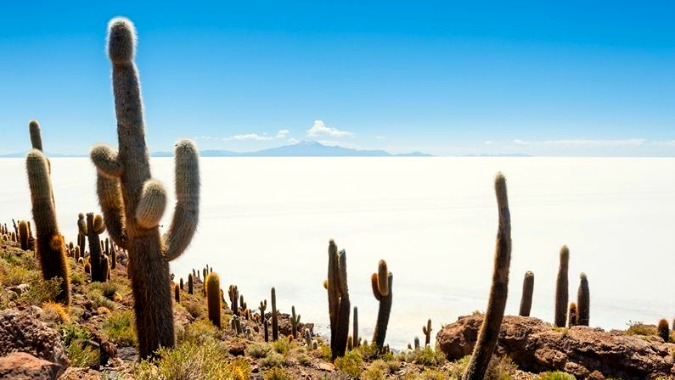
Tips and Knacks
We all want to immortalize our trips and be able to share them with our family and friends, right? the immediacy of social networks has made things much easier and today we can almost make a live visual diary of all our adventures... But, if just thinking about the light, shadows, perspective and depth stresses you out, you'd better stick to the simple, the phrase "less is more" has never made so much sense. You don't have to be a professional photographer to capture incredible photos, luckily, in this case you have the advantage, to get a good photo in the Salar, 80% is for the landscape and the other 20% is for you. So, here we leave you these 5 knacks to capture the best photos in the Salar de Uyuni:1- Depths and perspective
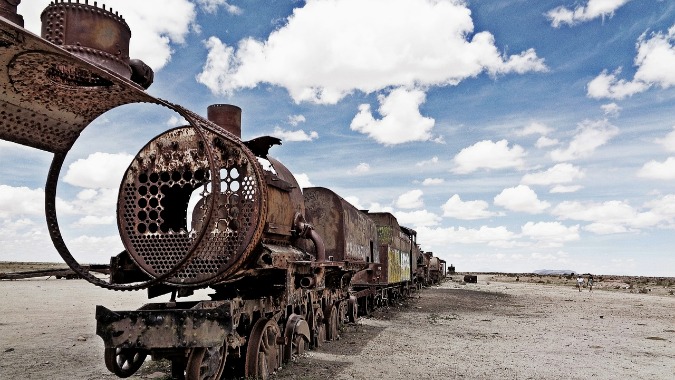
As the salt flat is very large, it is easy to play with the effects. You just have to keep trying until the picture looks as real as possible. Ask those in the photo to slowly move away from you until they are the size you want in the photos. Ask them to pose... 3... 2... 1... and... Shoot!![Salar de Uyuni]() Forced perspective works best when the object in the distance appears not to be touching the ground / Photo: Canva Pro
Forced perspective works best when the object in the distance appears not to be touching the ground / Photo: Canva Pro
2- Mirror Effect
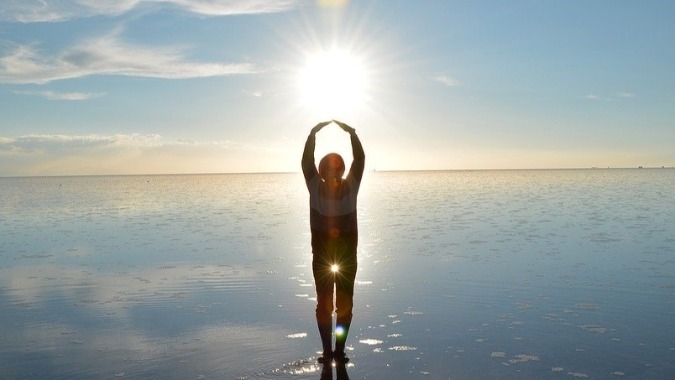
Those lucky enough to visit the salt flats in the rainy season can play with the reflections, as this is when the floor really looks like a mirror. This only happens in the months from December to March. In general, the best time to appreciate the effect is during sunrise and sunset, when the sun causes a real show of colors in the salt.![Salar de Uyuni]() Although most of the year it is white that stands out in this desert, in the rainy season it is covered by a thin layer of water that turns it into a large mirror in which the sky is reflected / Photo: Canva Pro
Although most of the year it is white that stands out in this desert, in the rainy season it is covered by a thin layer of water that turns it into a large mirror in which the sky is reflected / Photo: Canva Pro
3- Say goodbye to Zoom!
Never zoom your camera or place objects too close. This could ruin the effect by leaving distant objects slightly out of focus. One key point: watch the ground.4- Choose the right period
Plan your trip in advance and choose the right station. Time is of the essence. Each salt lake on our planet has its own seasonal characteristics, so you better discover them beforehand. If we talk about the Salar de Uyuni, the wet season is from November to March, and the dry season from May to September. So first you have to decide whether you want the Salar to be dry with its typical hexagonal surface formations or whether your aim is to experiment with the reflections of the surrealistic sky, and this is only achieved when the ground is covered with water.5- Get your imagination going!
The salt flat is so extensive, that no matter how much you visit it in high season, you won't notice the amount of people, so you'll always get free space so that no one can ruin your dream picture. Some good options are: jumping "inside" a glass, "holding" a person in your hand, a giant foot crushing people, among others.![Salar de Uyuni]() Bring out the creative side in you and remember to always ask yourself before taking it: what photograph can I do here that is different? / Photo: Canva Pro
Bring out the creative side in you and remember to always ask yourself before taking it: what photograph can I do here that is different? / Photo: Canva Pro
As you can see, the setting is unsurpassed: a white salt plain, usually covered by a layer of shallow water that has become a giant mirror. The Salar de Uyuni is a natural icon of Bolivia, and one of the most sought-after destinations in the country, and one that you definitely cannot miss. Your trip to the Salar de Uyuni is not complete without taking some of these pictures as a souvenir and... Don't forget to bring extra batteries for your camera! Travel Tip: Check out all the tours and activities in Bolivia that Daytours4u has for you, from interacting with local communities to the best authentic experiences. 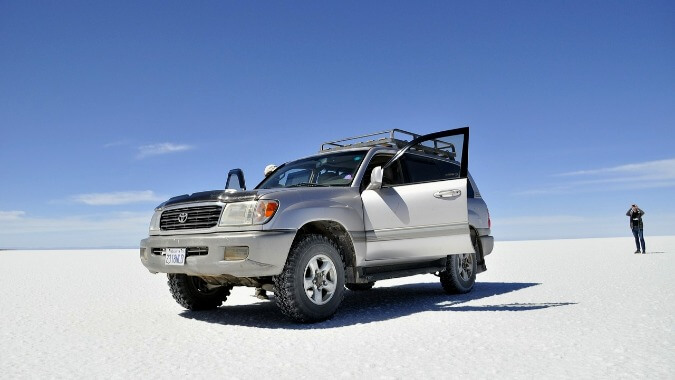
By: Nathaly Bosch, Venezuelan, social communicator by profession and curious traveler by choice. Spanish editor for Daytours4u.
Share whith yours friends:
Tags:
Search
Popular Tags
-
Iguazu Falls Brazilian Side TourfromUS$46
-
Exciting 4x4 route: São Luís and FortalezafromUS$2,250
-
-
Full Day Cafayate Tour from SaltafromUS$39
-
-
Transfer Ezeiza - AeroparquefromUS$107
-
-
-
-
-
-
-
-
Tierra del Fuego National Park Tour with Optional End of the World Train in UshuaiaRating:100% of 100fromUS$69
-
-
-
-
-
-
-
-
Daytours4u © 2012-2019. Use of this website constitutes acceptance of the Terms & Conditions.
Open Chat
Hello, How May I Help You?