
Buenos Aires
A Foolproof Guide to Getting Around Buenos Aires

Share whith yours friends:


Tags:
Buenos Aires is a big city, with exciting sights to explore in every corner. While walking is the best way to sightsee the city's attractions and architecture, at some point you're going to need some form of public transport. The city has an extensive public transport network which makes getting around Buenos Aires very easy. To help you out, read this foolproof guide to transport in Buenos Aires. [caption id="attachment_3792" align="aligncenter" width="610"]![Subway Map | Getting around Buenos Aires]() Getting around Buenos Aires is as simple as reading a map! / Source[/caption]
Getting around Buenos Aires is as simple as reading a map! / Source[/caption] ![Taxi in Buenos Aires]() Taking a radio taxi is always a safe option at night / Source[/caption]
Taking a radio taxi is always a safe option at night / Source[/caption] ![Entrance to Line D of the Subte / Source]() Entrance to Line D of the Subte / Source[/caption]
Entrance to Line D of the Subte / Source[/caption] ![Bus | Getting around Buenos Aires]() The bus, or colectivo, is the cheapest way to travel around the city / Source[/caption]
The bus, or colectivo, is the cheapest way to travel around the city / Source[/caption] ![Sube Card | Public Transport in Buenos Aires]() The SUBE card can be swiped on buses and the subway / Source[/caption] With this easy guide to getting around Buenos Aires, you shouldn't have any trouble at all exploring Argentina's vibrant capital!
The SUBE card can be swiped on buses and the subway / Source[/caption] With this easy guide to getting around Buenos Aires, you shouldn't have any trouble at all exploring Argentina's vibrant capital!
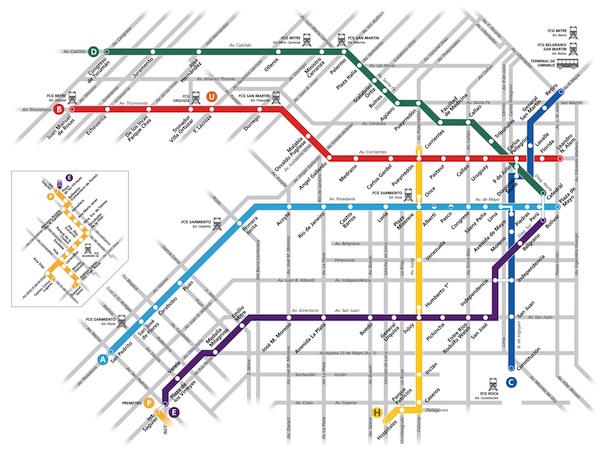 Getting around Buenos Aires is as simple as reading a map! / Source[/caption]
 Taking a Taxi
Compared to many places, taxis in Buenos Aires are relatively cheap. The classic black and yellow taxis can easily be flagged down on any streets. Convenient, quick and safe, this is always a viable transport option, particularly at night. Some tips on taking a taxi in Buenos Aires:- Free taxis show a red sign in their window which says "libre."
- It's common practice to give the cross streets of where you're going, rather than the number of the address. For example, saying Florida and Santa Fe, rather than Santa Fe 349. Write down the address and show it to the driver if you're worried about him/her misunderstanding.
- While taxis here are safe, taxi crime does still happen. It is safest to hail a radio taxi, or to call a radio taxi to your location. There are various companies operating, including Taxi Premium and Radio Taxi Porteño. While Uber doesn't operate in Argentina, there is the Easy Taxi app.
- Be careful of taxi scams. Avoid paying with AR$100 bills, as a common scam is for the driver to switch this out with a counterfeit note. If you do pay in a large bill, make a note of the last three digits of the note's serial number. The other popular scam is the "gringo route" where the driver takes a longer route to run up the meter. If a driver asks you which route you prefer, always state on option firmly (even if you're not sure). It's a good idea to have a rough idea of the route before getting into the cab.
- When taking a cab from the airport, always take an official taxi, paid for inside the terminal. To put your mind at ease, you can book an airport transfer for a stress-free arrival and departure.
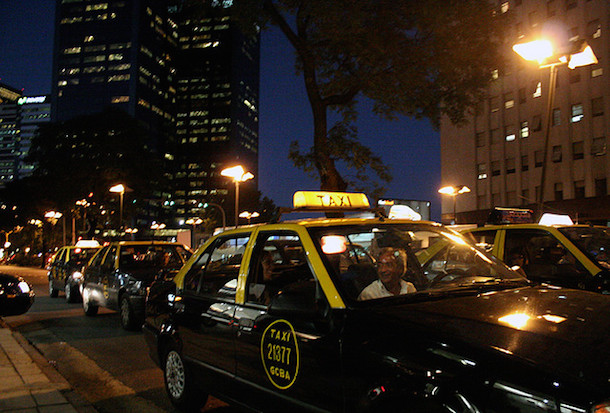 Taking a radio taxi is always a safe option at night / Source[/caption]
 Cross the city on the Subway
Buenos Aires boasts Latin America's oldest subway system. The Buenos Aires Subte has 6 lines (Linea A, B, C, D, E and H) and a premetro. The subte, as it is called here, is the quickest way to cross the city, provided there are no strikes or delays. What you need to know about riding the subway in Buenos Aires:- The subway runs from 5:30 am to 11:30 pm, Monday to Friday, from 6:00 am to 12:00 pm on Saturdays, and from 8:00 am to 10:00 pm on Sundays and holidays.
- You can buy a SUBE card in the Subte station. A single ride is AR$7.5.
- Note that the subway is extremely crowded during peak hours and it is best avoided at these times if possible.
- To work out which direction you need to go in, check the names of the final stations on your line. For example, on Line D, trains run between Catedral and Congreso de Tucumán. If you're going towards downtown, you need to be on the platform which says "trenes a Catedral." When you enter the station, check what the entrance sign says - not all entrances give you access to both platforms so it is necessary to enter from the right side of the road.
- If you need to get off at the next stop and there are people in front of you, politely ask "bajas?" If the people are also getting off they will indicate yes, wait behind them, otherwise they will move out the way for you. If you need to push past someone, simply say "permiso."
- At a connecting station, to change lines look for a sign that says "combinación con la linea (x)." Each line is colour-coded which makes it easy.
- Like in any crowded place in big cities across the world, pickpocketing is a reality. Keep an eye on your possessions at all times. If you have a backpack, it's best to swing it around to your front while on the subway.
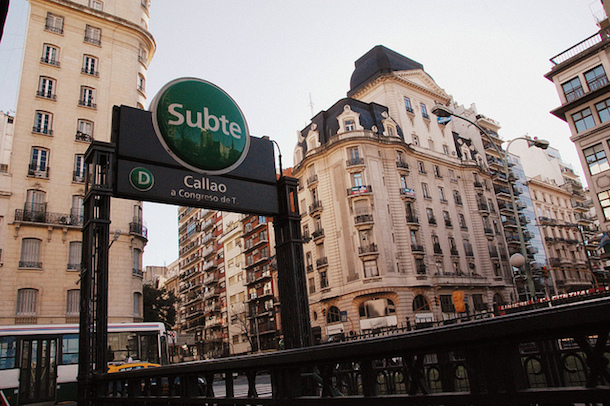 Entrance to Line D of the Subte / Source[/caption]
 Using the bus in Buenos Aires
The cheapest way to get around the city is by bus, or colectivo. The bus system in Buenos Aires is extensive, taking you to just about anywhere you need to go. It may seem complicated at first, but the buses are easy to use and a good method of transport.- To work out which bus to take, go to the website Cómo Llego or use the Guía T (a guide to the bus system available all over the city).
- Find the right parada (bus stop). Argentines queue to the right of the stop - and they always queue politely.
- Indicate to the driver of the bus by holding out your hand. If no one in the queue indicates they want to get on, the bus won't stop at that parada.
- Tell the driver where you're going (the nearest cross street or a specific location, like Teatro Colón). He will work out your fare. The cost is usually between AR$6.25 and AR$6.50 with a SUBE card.
- Note that the bus also gets very crowded and most of the time you have to stand. Hold on to the railing though - it's not always a smooth ride!
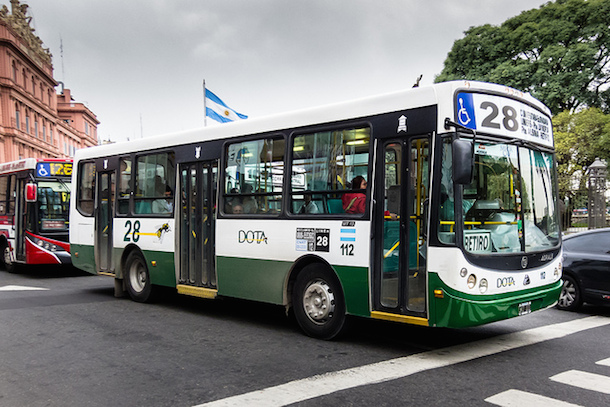 The bus, or colectivo, is the cheapest way to travel around the city / Source[/caption]
 Do I need a SUBE card?
The subway and bus system both run on a system of payment called the SUBE card, similar to London's Oyster card. If you're planning on using public transport during your stay here, especially the bus, it's worth buying a SUBE card. This can be bought in subway stations, kiosks and post offices which have the SUBE sign outside. The card costs AR$25, which you then charge with any quantity of money. You may be told to register it online, but this is not necessary as a tourist. The card is convenient and helps you save money on bus and subway fares. [caption id="attachment_3788" align="aligncenter" width="610"] The SUBE card can be swiped on buses and the subway / Source[/caption] With this easy guide to getting around Buenos Aires, you shouldn't have any trouble at all exploring Argentina's vibrant capital!
 Don't worry about figuring out transportation on arrival. Book a transfer service in Buenos Aires and in other destinations you're travelling to in Argentina. Let us worry about the logistics for you!
By Nicole Eberhard
Share whith yours friends:
Tags:
Search



Popular Tags
-
Iguazu Falls Brazilian Side TourfromUS$46
-
Exciting 4x4 route: São Luís and FortalezafromUS$2,250
-
-
Full Day Cafayate Tour from SaltafromUS$39
-
-
Transfer Ezeiza - AeroparquefromUS$107
-
-
-
-
-
-
-
-
Tierra del Fuego National Park Tour with Optional End of the World Train in UshuaiaRating:100% of 100fromUS$69
-
-
-
-
-
-
-
-
Daytours4u © 2012-2019. Use of this website constitutes acceptance of the Terms & Conditions.
Open Chat
Hello, How May I Help You?