
Salta & Northwest Argentina
Salta in 3 Days: Wine, Mountains and Andean Culture

Share whith yours friends:


Tags:
Argentina
Northern Argentina
Salta
cafayate
cachi
Andean
Things to Do in Salta in 3 Days: A Journey Through Mountains, Wine & Andean Culture
Surrounded by red-hued hills, high-altitude vineyards, and quiet villages where time seems to stand still, Salta is a captivating blend of history, landscapes, and tradition. In just three days, you can explore its highlights, taste its unique cuisine, and feel the essence of northern Argentina.
Below you’ll find a 3-day itinerary designed to help you discover the best of Salta balancing culture, nature, and authentic local experiences.
 The pink Cathedral Basilica lights up the heart of Salta at sunset. A stroll through Plaza 9 de Julio captures the city’s colonial elegance and relaxed rhythm.
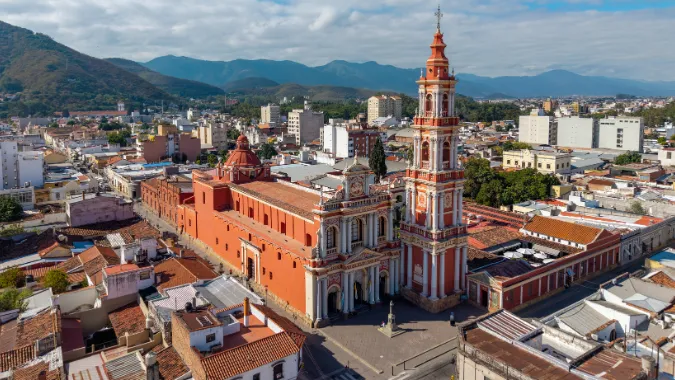 The pink Cathedral Basilica lights up the heart of Salta at sunset. A stroll through Plaza 9 de Julio captures the city’s colonial elegance and relaxed rhythm.
Day 1 – Salta City: History, Local Flavors & Folk Music
The ideal starting point for exploring northern Argentina is Salta City a place where colonial charm, Andean culture, and modern life coexist in perfect harmony. Cobblestone streets, wooden balconies, and shady squares lined with tipa trees invite you to slow down and take it all in.
Morning – Historic Circuit & Valley Views
The best way to begin is with a walking tour of the historic center. Everything is located within a few blocks around Plaza 9 de Julio, the vibrant heart of the city.
Suggested route:
- Plaza 9 de Julio: surrounded by colonial arcades, this is the most photogenic spot in town. Sit on a bench beneath the orange trees and watch locals pass by in their wide-brimmed hats — a simple but charming scene of everyday Salta life.
- Cathedral Basilica of Salta: its pink and gold façade glows in the morning light. Inside lie the remains of General Martín Miguel de Güemes, a national hero of Argentina’s independence.
- Historic Cabildo: just steps away, this white-arched building once housed the colonial government. Today it’s home to the Museum of the North, displaying artifacts from pre-Hispanic to republican times.
- High Mountain Archaeology Museum (MAAM): one of Argentina’s most fascinating museums. It houses the famous Llullaillaco Children — three Inca mummies discovered at more than 6,000 meters above sea level, perfectly preserved in the Andes.
- Caseros Street: walk east along this charming avenue lined with historic houses and artisan shops. Along the way, you’ll find the San Francisco Church, with its striking red-and-gold façade, and the San Bernardo Convent, one of Salta’s oldest buildings.
Photo tip: From Plazoleta IV Siglos, at the corner of Caseros and Buenos Aires Streets, you’ll get a postcard view of the colonial towers framed by the surrounding mountains.
San Bernardo Hill Viewpoint
For a panoramic perspective of the city, take the San Bernardo Hill cable car, which departs from San Martín Park, about a 10-minute walk from downtown. The view from the top reveals Salta’s grid-like layout nestled in a green valley surrounded by mountains.
At the summit, you’ll find scenic trails, viewpoints, and small stalls selling local ceramics and woven crafts from nearby villages.
Midday – Local Flavors at Mercado San Miguel
Back in town, the air fills with the smell of freshly baked empanadas and steaming humitas. It’s the perfect time to visit Mercado San Miguel, a classic gathering spot for locals.
Among stalls overflowing with fruits, spices, and colorful Andean textiles, local cooks serve traditional dishes on ceramic plates:
- Salteño-style empanadas baked in clay ovens.
- Hearty locro stew made with corn and sausage.
- Tamales wrapped in corn husks and steamed to perfection.
Where to try the best empanadas in Salta:
- Doña Salta: right by the main square, offering classic recipes in a charming colonial setting.
- La Criollita: a more casual spot with a clay oven in plain view.
- El Patio de la Empanada (Portezuelo neighborhood): off the tourist circuit but beloved by locals.
Afternoon – San Lorenzo, Salta’s Green Escape
Just 15 minutes from downtown, the village of San Lorenzo offers a refreshing natural contrast. This small oasis of subtropical forest is filled with fern-lined trails and the gentle sound of the river.
You can join guided hikes, go horseback riding, or visit the Quebrada de San Lorenzo Nature Reserve, home to toucans and hummingbirds.
For a relaxed afternoon break, stop at Café del Tiempo or enjoy sunset drinks at the Selina Salta rooftop terrace, where the view glows golden as the sun dips behind the hills.
Evening – Folklore Nights and Peñas
When night falls, Salta comes alive with guitars, drums, and laughter. The city’s traditional peñas folklóricas local taverns with live folk music — are a must for anyone wanting to experience authentic northern Argentine culture.
- La Casona del Molino: shared tables, spontaneous musicians, and a truly local atmosphere.
- La Vieja Estación: a bit more organized, with live folk shows and regional cuisine.
- Peña Balderrama: a cultural icon that inspired some of Argentina’s most famous zambas.
A glass of chilled Torrontés wine and a spontaneous folk song are enough to understand why this city is lovingly called “Salta la Linda.”
👉 Book your City Tour in Salta here
Day 2 – From Salta to Cafayate: The Wine Route & the Quebrada de las Conchas
The second day invites you to leave the city behind and venture into the Calchaquí Valleys, where desert tones blend with the green of vineyards. The drive to Cafayate along National Route 68 is one of the most scenic journeys in northern Argentina — three and a half hours of pure Andean geography.
 Red cliffs and desert wind — the Quebrada de las Conchas showcases some of northern Argentina’s most dramatic landscapes, with stops like the Amphitheater and Devil’s Throat.
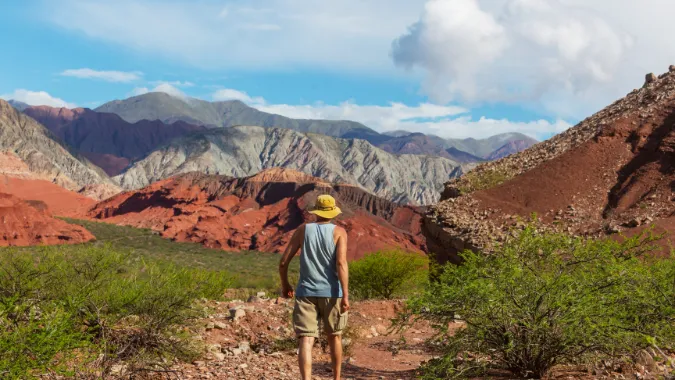 Red cliffs and desert wind — the Quebrada de las Conchas showcases some of northern Argentina’s most dramatic landscapes, with stops like the Amphitheater and Devil’s Throat.
Quebrada de las Conchas – The Red Heart of the Valley
As you drive away from Salta, the landscape transforms. The fertile plains of the Lerma Valley give way to bare mountains and red rock formations that look almost otherworldly. This is the Quebrada de las Conchas — a canyon carved by wind and water over millions of years.
Must-see stops:
- Devil’s Throat (Garganta del Diablo): a deep fissure between vertical red-rock walls where the wind creates an eerie natural echo.
- The Amphitheater: a natural cave with perfect acoustics, often filled with the sound of local musicians playing zambas and Andean flutes.
- Los Castillos & Las Ventanas: rock formations shaped like ancient fortresses. The contrast of crimson stone and blue sky is a photographer’s dream.
- Tres Cruces Viewpoint: a panoramic stop where the valley opens into a mosaic of ochre and golden tones.
Traveler tip: To enjoy the scenery without worrying about mountain driving, join the Day Trip to Cafayate with Wine Tasting offered by Daytours4u — including transport, local guide, and photo stops along the canyon.
In Cafayate – The Soul of High-Altitude Wine
Upon reaching Cafayate, the air turns dry and perfumed with ripe grapes. Surrounded by mountains and vineyards, this small town is the heart of Argentina’s high-altitude wine region, where vines grow between 1,600 and 2,000 meters (5,200–6,500 ft) above sea level.
 Among golden mountains and vineyards, Cafayate produces the famous Torrontés wine — the emblem of northwestern Argentina’s wine route.
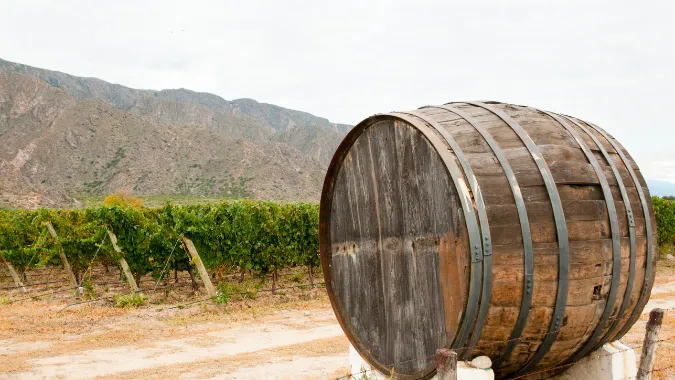 Among golden mountains and vineyards, Cafayate produces the famous Torrontés wine — the emblem of northwestern Argentina’s wine route.
Things to Do in Cafayate:
- Visit the wineries: from traditional estates like Bodega El Esteco (with colonial architecture and lavender gardens) to modern ones like Piattelli Vineyards with a panoramic restaurant overlooking the valley.
- Taste Torrontés wine: the signature white grape of northern Argentina, known for its floral aroma and fresh taste. Most wineries offer guided tastings paired with local cheeses and nuts.
- Explore the historic center: Cafayate’s main square is surrounded by craft markets, century-old churches, and relaxed cafés perfect for people-watching.
- Visit the Museum of the Vine and Wine: an interactive experience explaining how altitude and dry climate shape these unique wines.
👉 Book your Cafayate Day Trip here
Lunch Among the Vineyards & a Northern Siesta
In Cafayate, lunch is a ritual. Restaurants combine local ingredients with dreamy mountain views:
- Bodega Nanni: organic wines served with paired menus in a patio covered by vine leaves.
- Piattelli Restaurant: gourmet regional dishes with sweeping views of the valley.
- El Terruño or La Casa de las Empanadas: casual local favorites to try quinoa empanadas, tamales, or slow-roasted goat.
Tip: After lunch, stop by Heladería Miranda for a scoop of artisan ice cream made with Torrontés wine or cayote (a local fruit) and walnut — a Cafayate classic.
👉 Book your High-Altitude Wine Tour in Cafayate here
Day 3 – Cuesta del Obispo & Cachi: High-Mountain Landscapes and Giant Cacti
The final day is a journey through the clouds. The road to Cachi — a colonial gem tucked within the Calchaquí Valleys — combines the thrill of the ascent with the peace of a timeless Andean village.
Scenic Drive – Cuesta del Obispo and Los Cardones National Park
Leaving Salta along Provincial Route 33, the road first crosses the green fields of the Lerma Valley before climbing into the mountains. As you ascend, the curves tighten and clouds wrap around the peaks — this is the Cuesta del Obispo, one of the most stunning drives in northern Argentina.
At the Piedra del Molino Viewpoint (3,400 m / 11,150 ft), the air is crisp and thin. From here you can see the valley spread out like a golden tapestry, framed by deep-blue mountains — a perfect spot to grasp the immensity of the Andes.
Farther ahead lies Los Cardones National Park, a high-altitude desert dotted with thousands of century-old cacti, some over six meters (20 ft) tall. The road cuts straight through the flat plain of Tin Tin, an ancient Inca trail still perfectly aligned with the horizon.
 Ancient cacti standing tall under the Andean sun at Los Cardones National Park — an iconic landscape of northwestern Argentina.
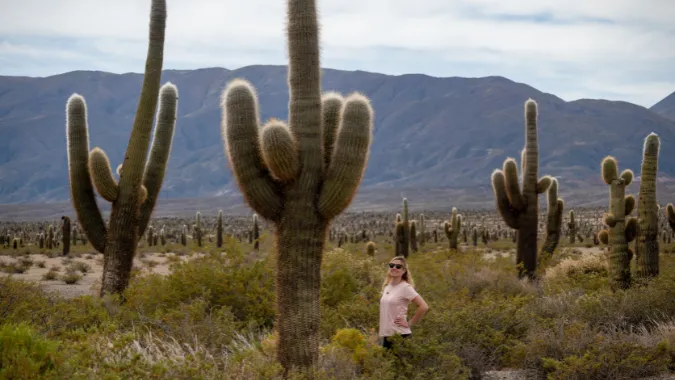 Ancient cacti standing tall under the Andean sun at Los Cardones National Park — an iconic landscape of northwestern Argentina.
In Cachi – Colonial Charm & Mountain Calm
Upon arrival in Cachi, the pace slows. Cobblestone streets lined with white-washed adobe houses lead to the main Plaza 9 de Julio. Here you’ll find the 18th-century San José Church, built with roofs of giant cactus wood, and the Pío Pablo Díaz Archaeological Museum, which displays artifacts from the pre-Hispanic era.
From the square, the snow-capped Nevado de Cachi dominates the horizon, rising over 6,000 meters (19,700 ft) above sea level.
 Cobblestone streets, white adobe houses and the Nevado de Cachi in the background — a timeless scene of the Argentine north.
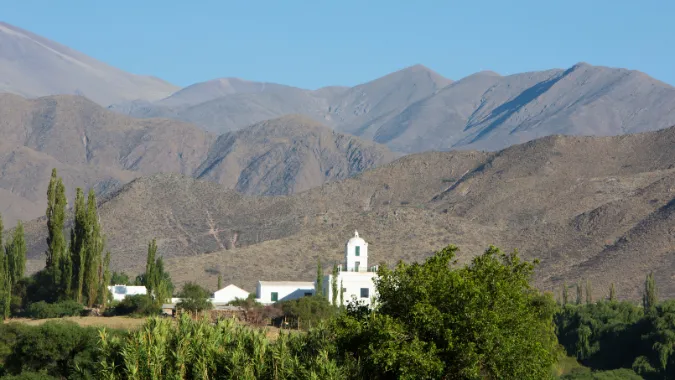 Cobblestone streets, white adobe houses and the Nevado de Cachi in the background — a timeless scene of the Argentine north.
Where to Eat in Cachi:
- La Merced del Alto: an elegant restaurant with mountain views and refined regional cuisine (perfect for lunch).
- Oliver Wine Bar: great for a glass of local wine and a cheese platter.
- Viracocha Café or Nevado Bar: laid-back spots for coffee or an afternoon snack on the square.
👉 Book your Day Trip to Cachi here
Practical Tips for Enjoying Salta to the Fullest
- Best time to visit: March to May or September to November for pleasant temperatures and clear skies.
- Altitude: Cachi and Cafayate sit above 2,000 m (6,500 ft); stay hydrated and eat light meals.
- Typical dishes: Salteño empanadas, tamales, locro (stew), and Torrontés wine.
- Souvenirs to bring home: woven ponchos, ceramics, local spices, and hand-carved cactus-wood crafts.
- Getting around: rent a car or join organized tours to make the most of your time.
Three Days to Fall in Love with Northern Argentina
Salta is more than a destination — it’s a journey to the heart of northwestern Argentina. In just three days you can taste its flavors, explore its history, and wander through landscapes that look like paintings.
From colonial alleys to vine-covered valleys, every corner invites you to return.
Discover the best tours in Salta with Daytours4u and enjoy authentic experiences with expert local guides.
Share whith yours friends:
Tags:
Argentina
Northern Argentina
Salta
cafayate
cachi
Andean
Search

Daytours4u © 2012-2019. Use of this website constitutes acceptance of the Terms & Conditions.